richard@pureseo.com
 +64 21 242 9666



















Handcrafted and strategic SEO campaigns.
Whether you are a new one-man band start-up targeting a very specific location in New Zealand, or a large multi-national brand operating in countries across the globe – we can optimise your website.
SEO to efficiently improve your search results and drive more website traffic
Our SEO services make your business the top choice for the countless people searching for what you have to offer.
We’ve helped some of the biggest names in New Zealand business dominate the search engine results pages.

SEO services that generate leads and drive sales
With higher online visibility comes increased web traffic, engagement, and revenue. Make your business the top choice for the millions of people who rely on search engines to find the products and services they need.
Let Pure SEO help you optimise your business website to rank higher on search engines, generate more traffic, and convert more visitors into paying customers. Our search engine optimisation experts will work alongside you to ensure that your website achieves your business goals.
Reach more customers with a website that works
Don’t leave money on the table by conceding search engine traffic to your competitors. Claim the brand awareness, consumer trust, and cold, hard cash that comes with first-page rankings on Google.
Talk to the experts at New Zealand’s most awarded SEO agency today to transform your website into a profit machine!
Get an instant SEO report
Try our free SEO assessment tool below to see if your website is primed for search engine success.
We wrote the book on SEO. Literally.
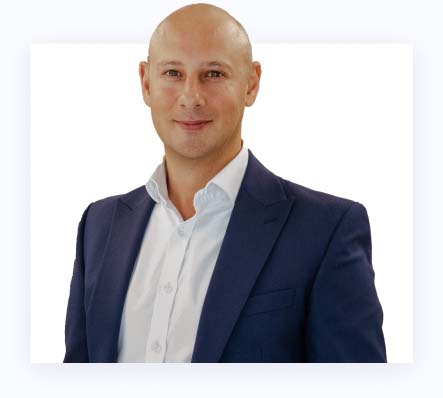
Pure SEO Founder and CEO Richard Conway has been a leading voice on SEO in New Zealand for over a decade. His book, How to Get to the Top of Google Search, was published by Penguin in 2019.
Over half of all website traffic comes from organic search
Most people trust search engines to find the best local products and services. It is the #1 source for online shoppers, accounting for nearly 40% of traffic to eCommerce websites.
What’s more, online revenue has seen a sustained surge since 2020. Businesses that embrace omnichannel marketing strategies achieve higher customer spend, both online and in-store.
Is your business one of them?
Less than 1% of searchers click on second-page results.
If your website isn’t ranking on the first page of Google, your customers won’t see it. If you’re not ranking, these customers will choose the competitors who are—it’s as simple as that.
Search engines are the best place to find customers online but reaching the first page is a long-term investment. It requires the expertise and experience of SEO professionals who understand your business, industry, and market.
At Pure SEO, we understand the stakes. We’ll work with you to deliver the online visibility your business deserves.
68%
of all online experiences begin with a search engine query.
31%
of all clicks on search engine results pages are the #1 result.
90%
of consumers in the developed world expect retailers to sell online.
What is SEO?
Search engine optimisation (SEO) is the practice of improving specific online signals on your website to deliver a better experience for users and appeal to the algorithms that determine search rankings.
Google’s search algorithm determines which pages appear on its Search Engine Results Pages (SERPs). This algorithm is updated 800+ times yearly, encompassing 250+ simultaneous factors and more than 10,000 signals and sub-signals when ordering search results.
Less than 1% of searchers click on second-page results.
While the basics of SEO can be relatively simple, high-calibre SEO efforts are sophisticated and time-consuming. Most small to medium-sized businesses must rely on a trustworthy SEO agency to deliver sustainable results.
Those results, however, are worth the investment. After all, the main source of customers for most businesses is the internet, and it all starts with a simple search. People place most of their trust in the brands that appear first in their search results. Get your free SEO report today to see how your business can start earning that trust and reaping the rewards that come with it.
Discover how SEO can transform your business
Generate more sales and leads
SEO helps to put your website in front of active online users who become viable leads and potentially paying customers. Position your website in the mainstream of search results and enable more online conversions.
Improve your online visibility and web traffic
The purpose of your business’s website is to make money, but it can’t do that if nobody sees it. SEO connects you with online users actively searching for what you have to offer. These are high-quality leads, finding your website organically, so you don’t pay for the clicks.
Strengthen your brand’s credibility
Studies show that people place more trust in brands that rank higher on search engines. Strong SEO invites potential customers to trust you as much as Google, elevating your brand’s reputation and performance.
Outrank your competitors
The top of Google search is precious real estate. If you’re atop the rankings, then your competitors aren’t. Stake your claim for the largest share of potential customers turning to search engines to find what they need.
Unleash the power of your full digital strategy
Strong SEO can empower every element of your multichannel marketing strategy. It can boost the quality score of your Google Ads campaign landing pages, improve the user experience for visitors arriving from social media posts, and much more.

Learn more about our SEO services
When you choose Pure SEO, you’ll enjoy a comprehensive suite of SEO services driven by industry-leading knowledge and experience. Here’s how we work with you to transform greater online visibility into leads, sales, and revenue.
What you’ll receive from our SEO services
- Introductory consultation to understand your business goals and challenges
- Keyword research to identify the popular search terms most relevant to your business
- Detailed analysis of your products and services to design a robust website structure
- Comprehensive SEO audit of your website to identify opportunities
- Investigation and analysis of your biggest online competitors
- Analytics-driven target audience insights
- Ongoing link building to improve your website’s online authority and reputation
- Optimisation of your website’s landing page content
- Recommended website code adjustments using advanced SEO techniques
- Ongoing reporting and SEO insights
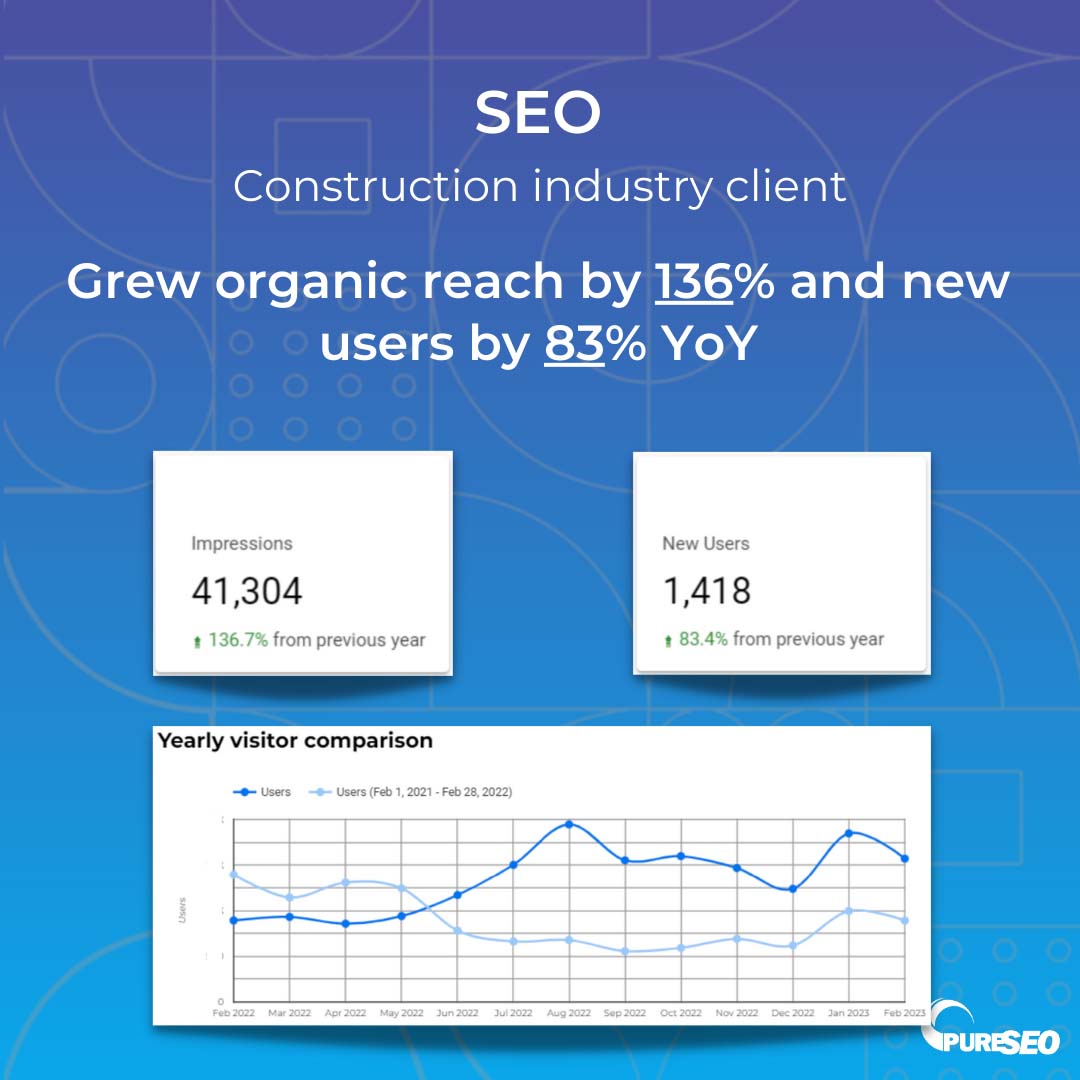
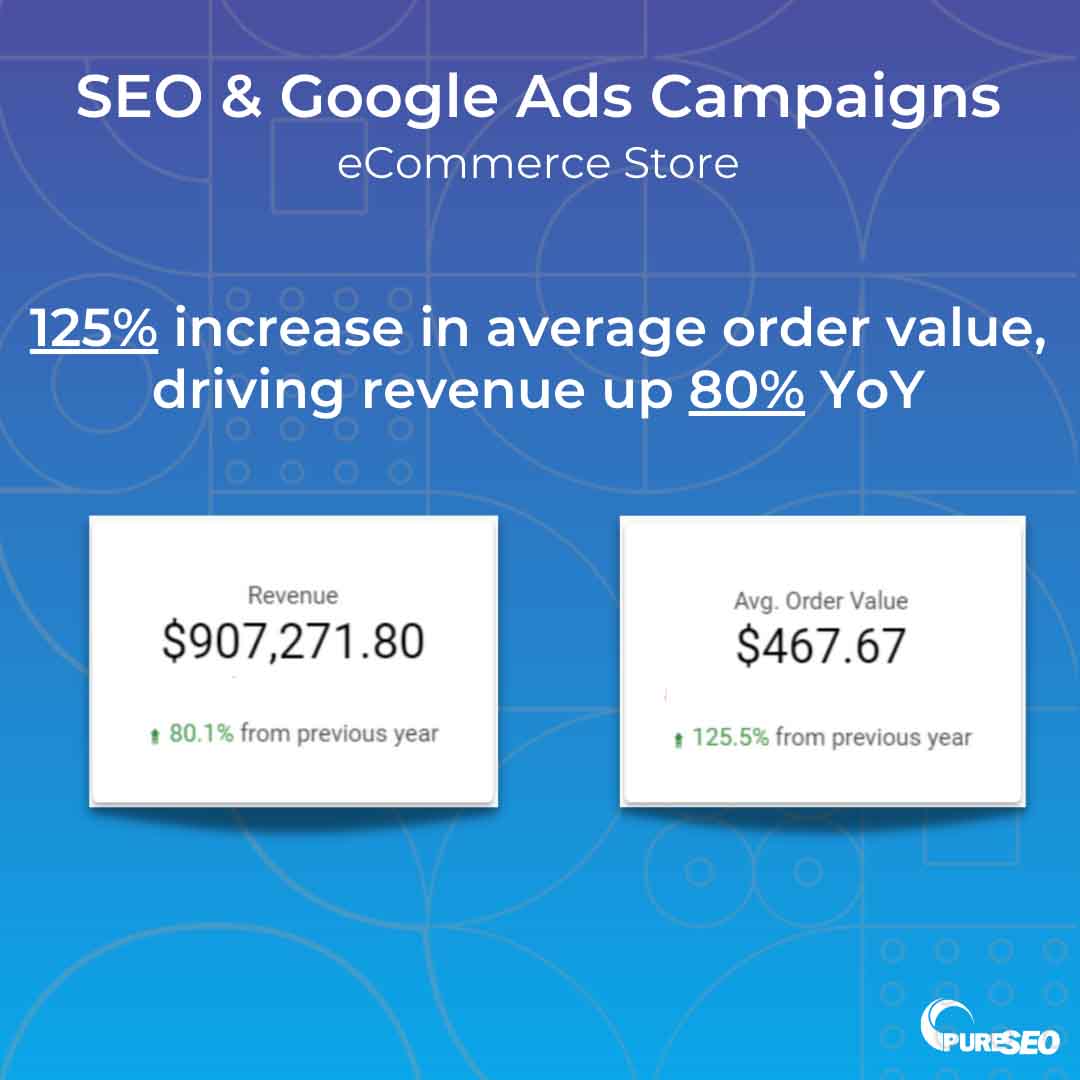
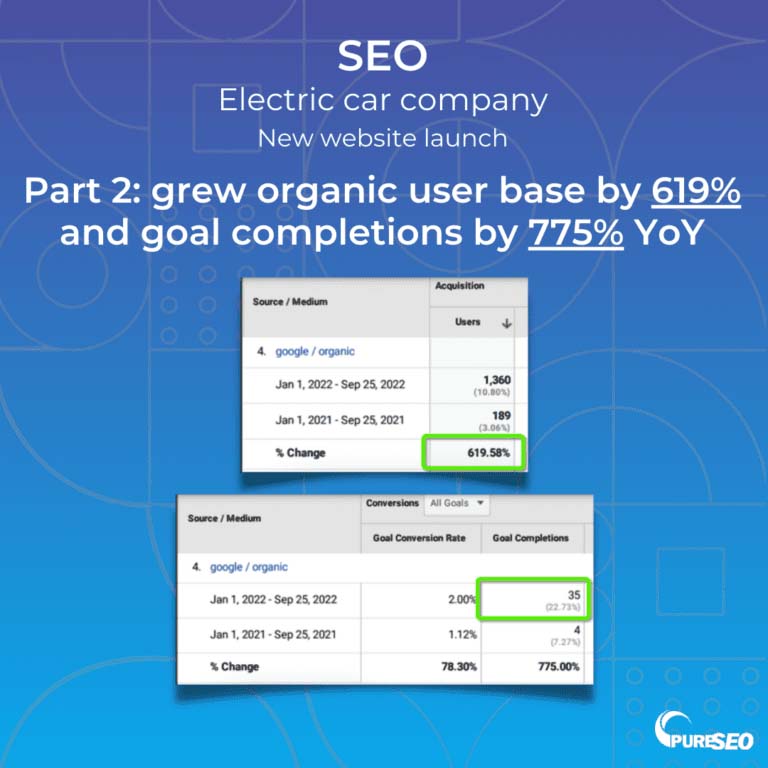
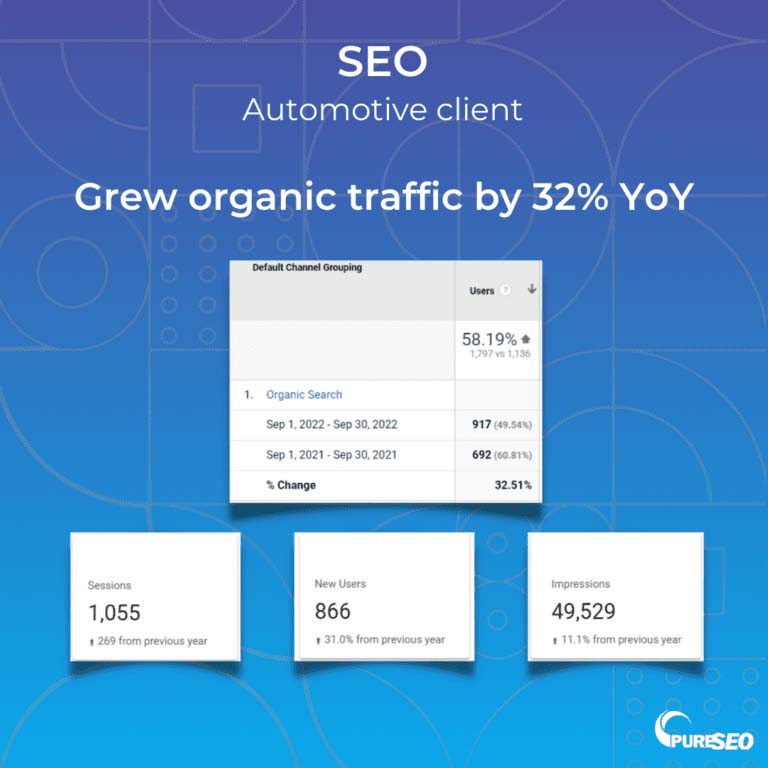
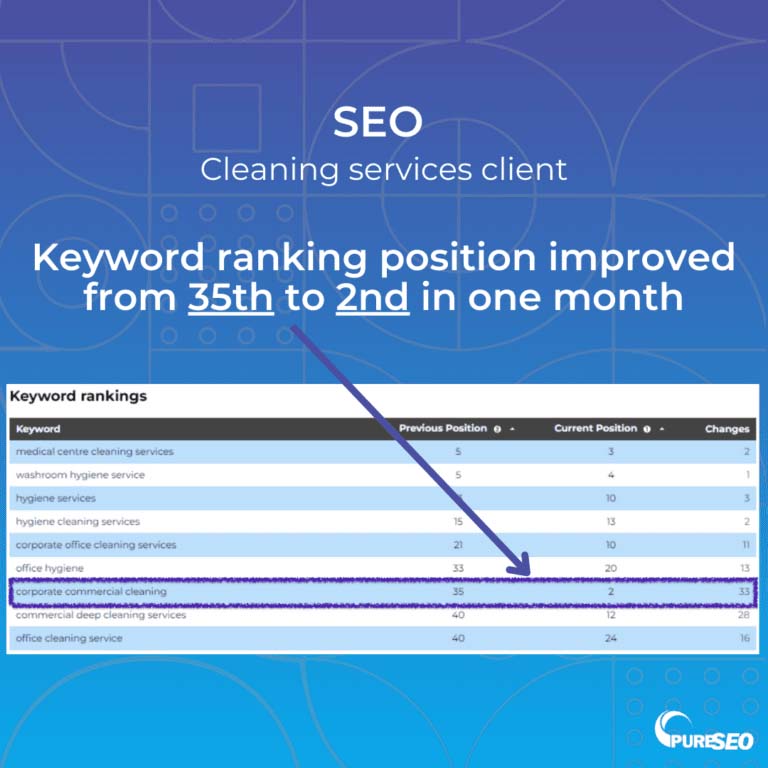
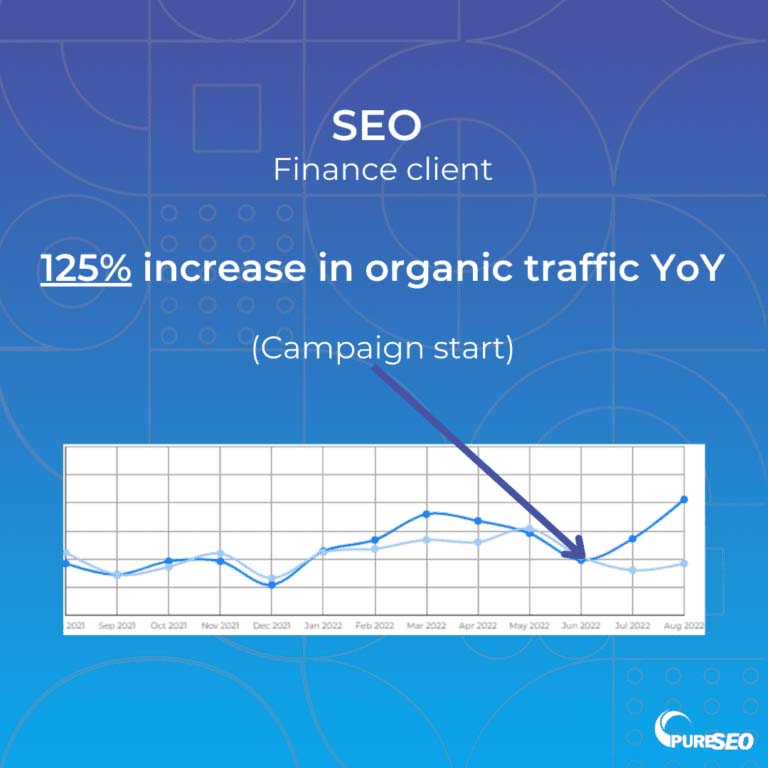
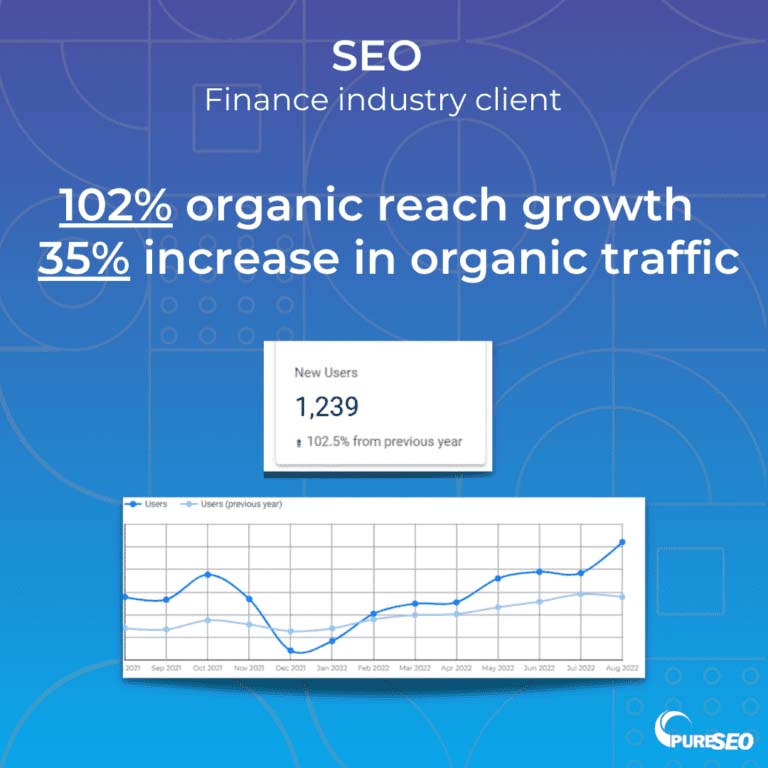
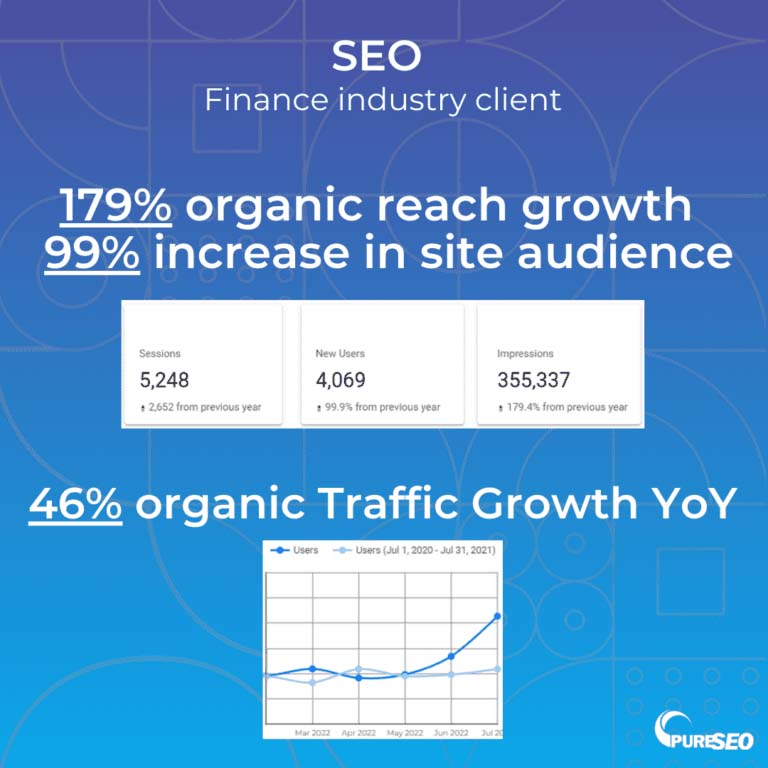
Check out our recent client SEO wins
Doing digital the right way
SEO is a long-term investment, and we won’t tell you differently. Noticeable improvement to search engine rankings can take months, which is why our SEO campaigns typically run for at least a year.
At Pure SEO, we don’t make empty promises and always abide by transparent, white hat SEO best practices to ensure sustainable success for your business. You’ll enjoy ongoing support with practices you can trust and results you can see.
Should your SEO agency guarantee results?
SEO agencies that guarantee specific results are making promises they can’t always keep. They may even be engaging in shady black hat SEO practices that could hobble your website with a Google penalty. They may also be notching easy wins just to claim victory, optimising your site to rank for low-value keywords that nobody searches.
SEO is a journey—not a destination. Rankings can and will constantly fluctuate as competitors change their websites and search engines update their algorithms. That’s why no SEO agency will guarantee results if they’re being straight with you.
While Pure SEO doesn’t guarantee #1 rankings, our record clearly shows we deliver them anyway.
We’re an ethical SEO agency
Richard Conway founded Pure SEO to be the industry’s most ethical, transparent, and professional SEO agency. Our goal is to raise the bar for New Zealand’s business community by helping our clients achieve success.
In fact, Richard believes so much in these principles that he’s happy to share them with you directly. Give him a call or email him at:
A 100% Kiwi company that delivers
Pure SEO is New Zealand’s most awarded SEO agency, having operated for over a decade from our head office in Auckland. Founded in Auckland and locally owned, we have one of New Zealand’s largest, most experienced, and most qualified search engine optimisation teams. We work in-house to optimise your website, ensuring that it ranks organically for the search terms that matter most.
Operating in New Zealand and Australia, we’ve helped thousands of companies get more from their websites over the years.
We offer a wide range of white hat SEO services to improve the ranking performance and visibility of any website. Our expertise lies in identifying the factors that lead to improved and sustainable search engine rankings and internet traffic and then being able to act upon them.
The proof is in the rankings
When you Google ‘SEO’, what do you see?
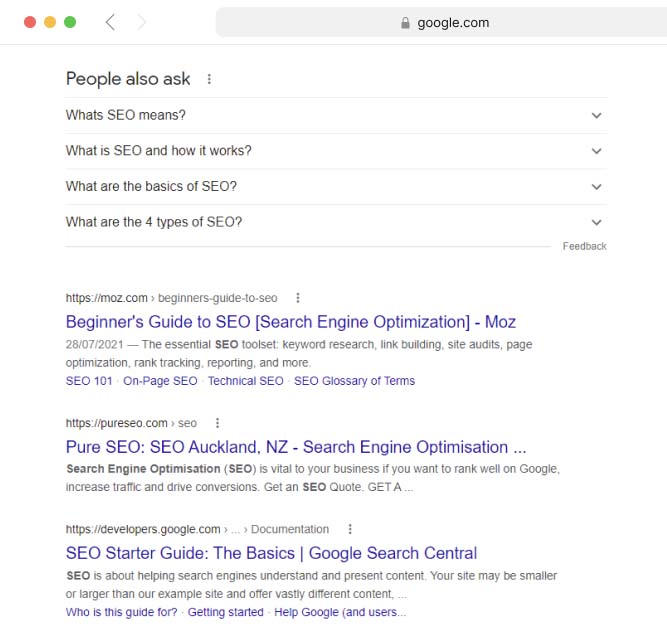
Don’t trust an SEO agency that can’t dominate the rankings themselves. Pure SEO is consistently the top-ranking SEO service in New Zealand for the industry’s most competitive keywords.
That’s how you know we’ll deliver real results for your business.
Our awards


Our SEO services are available worldwide
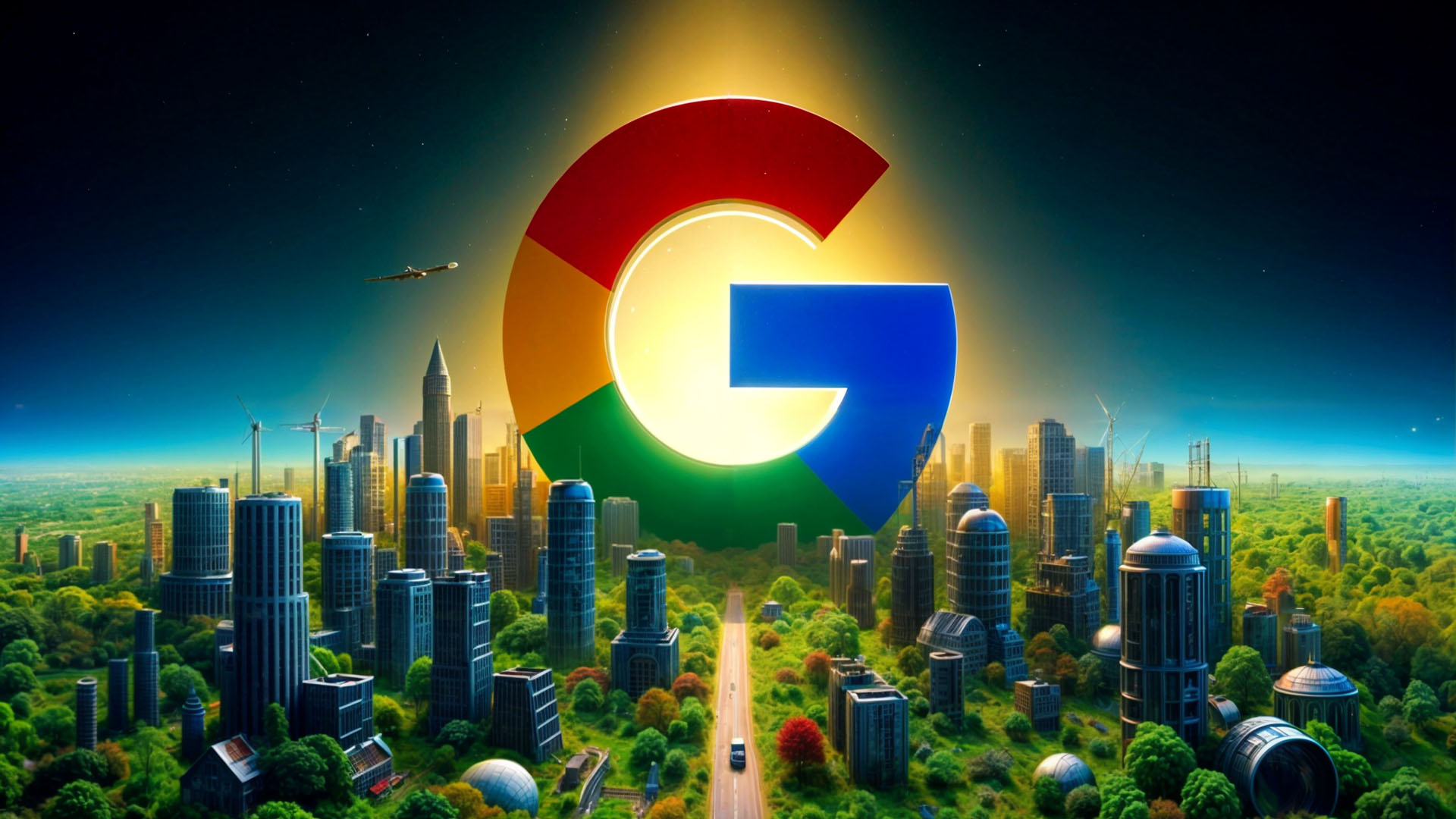
Impact of Google’s March Core Update on Websites and SEO Strategies
Google rolled out the core and spam updates in March 2024. These updates were introduced as a step against the surge of low-quality content published online. The goal? To enhance search quality and overall user experience (U
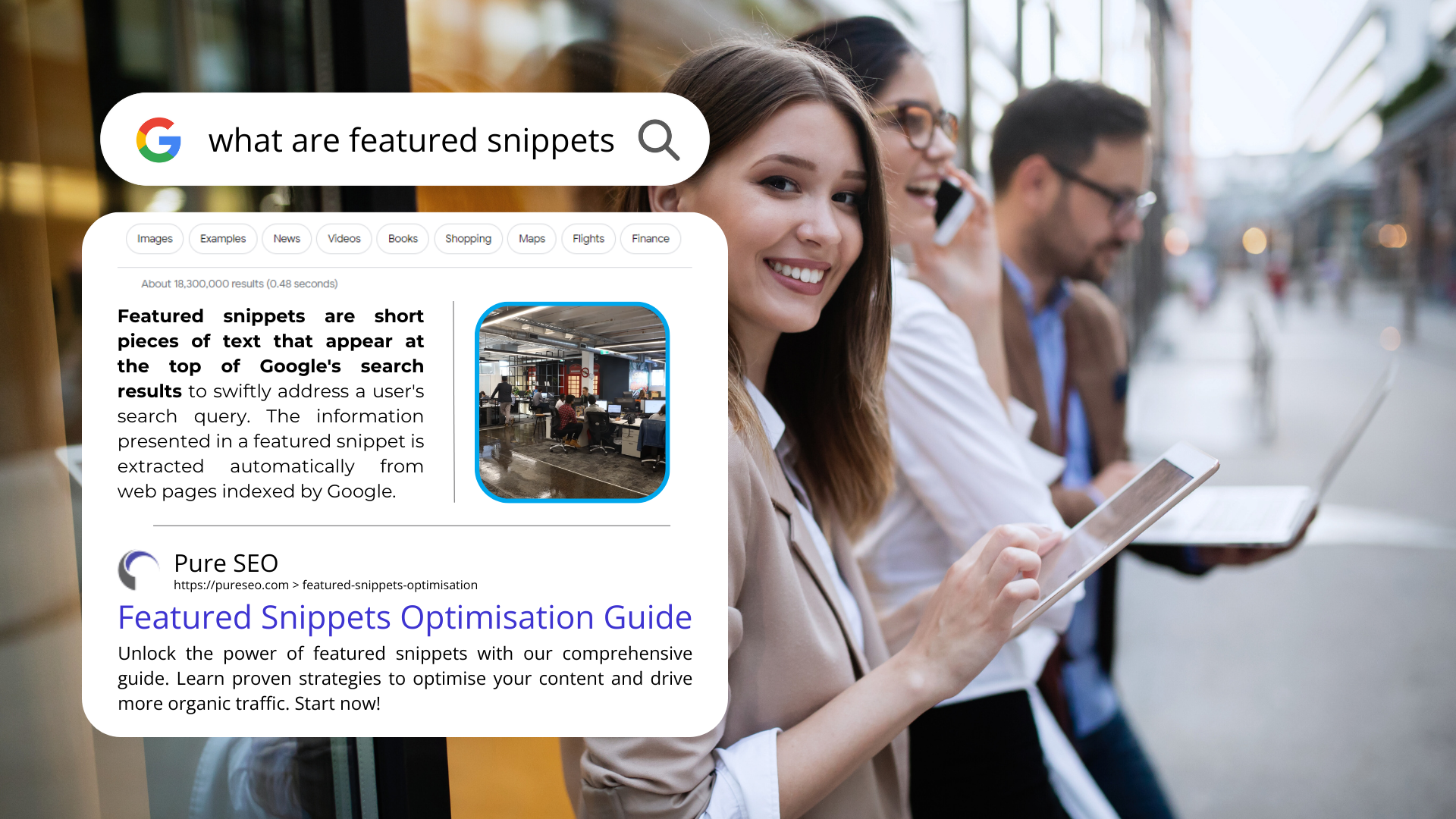
Featured Snippets Optimisation Guide 2023
In today's digital landscape, securing maximum visibility on search engines is crucial for business
Google E-E-A-T and its Importance in SEO
If you're new to SEO, you may be curious what Google's E-E-A-T is and why it matters. Below, we div
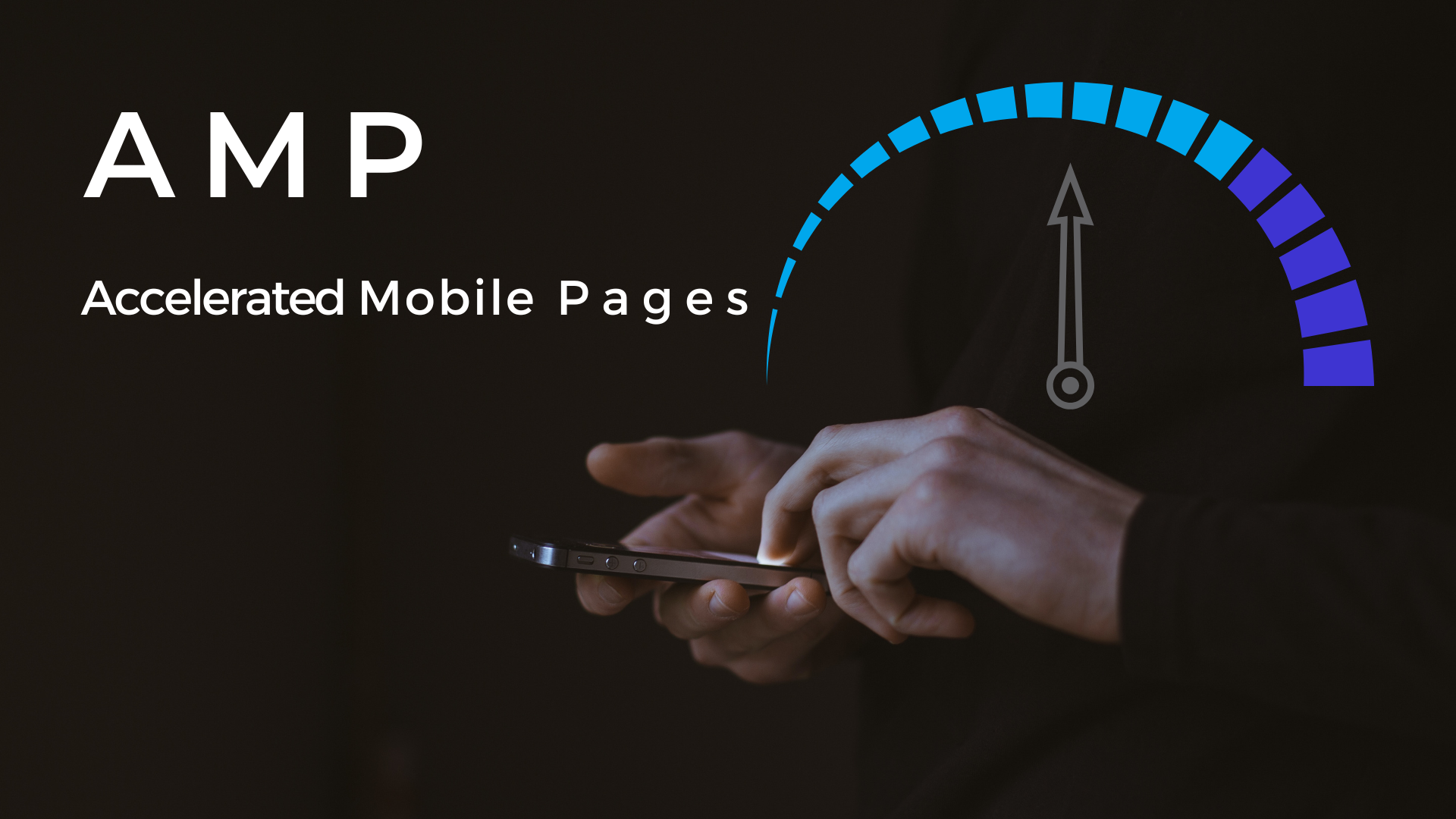
What Are Accelerated Mobile Pages?
User experience on mobile phones or tablets can range from speedy and efficient to slow and frustra





FREE SEO REPORT - INSTANT
Your report will display in a new tab once you submit this form.